Exogenous Ketones: How Much BHB Do Studies Actually Use?
Written by the Retride editorial team
Last updated · Who reviewed this page · How we write and review
Human BHB salt studies used about 5 to 30 g of BHB per dose or day. Salt drinks of 12 to 24 g raised blood ketones to only about 1 mM, and 10 g or 24 g a day added no significant weight loss over placebo. Retride's whole blend is 60 mg, roughly 80 to 500 times less.
How much BHB do studies actually use?
Human studies of BHB salts used about 5 to 30 grams of BHB per dose or per day. That is 5,000 to 30,000 mg.
An expert review for a sports science group found that ketone salt studies usually gave about 7 to 30 g of BHB (GSSI, 2022). Weight trials sat inside that range.
| Study | BHB dose | Length | Main result |
|---|---|---|---|
| Stubbs et al., 2017 | About 12 or 24 g in one drink | Single lab visits | Blood ketones about 1 mM with salts |
| Roeth et al., 2025 | 5 g twice a day, about 10 g a day | 8 weeks, 51 adults | No significant body change vs placebo |
| Buga et al., 2021 | 11.8 g twice a day, about 24 g a day | 6 weeks, 25 completers | No extra weight or fat loss vs placebo |
| Egan, 2022 review | About 7-30 g in salt studies | Review of many trials | Blood ketones about 0.5-1.0 mM |
Every dose in that table is counted in grams. Keep that unit in mind when you read a keto pill label.
How does a 60 mg blend like Retride compare?
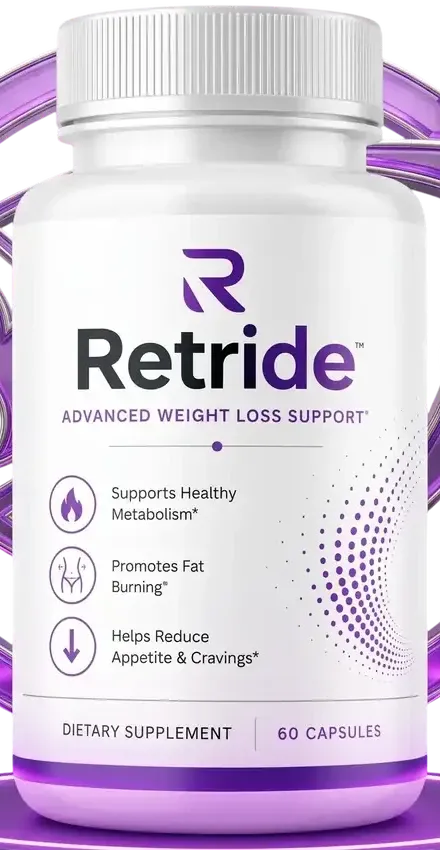
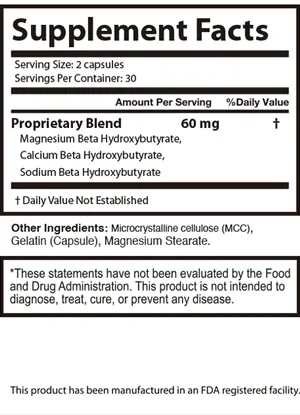
It is far below every study dose. Retride lists one 60 mg proprietary blend per two-capsule serving, and the 60 mg includes the weight of the minerals.
So the whole blend is roughly 1/80 to 1/500 of the BHB used in studies. The BHB part alone is smaller still, but the label does not say by how much.
Retride's whole 60 mg blend, minerals included, is roughly 1/80 to 1/500 of the amounts used in human studies. Sources: (Roeth et al., 2025) (GSSI, 2022) (Buga et al., 2021)
Even 12-24 g of BHB from salts raised blood ketones to only about 1 mM, less than ketone esters. Sources: (Stubbs et al., 2017)
The magnesium share of the blend is not printed; the whole blend is 60 mg, so it cannot reach this limit. Sources: (NIH ODS, 2026)
Retride amount dose range used in human studies (log scale)
The meter uses a log scale, so each step is ten times bigger than the last. There is no published study of the finished Retride formula. The Retride Supplement Facts page shows the full panel line by line.
How much BHB does it take to raise blood ketones?
Grams, not milligrams. In a careful lab study, salt drinks with about 12 to 24 g of BHB raised blood D-BHB to about 1.0 mM (Stubbs et al., 2017).
The same dose given as a ketone ester raised levels to about 2.8 mM. Salts produced well under half of that.
The studies cited here did not test doses of a few dozen milligrams. So there is no data showing a ketone rise from that little.
Why do ketone esters raise ketones more than BHB salts like Retride's?
Part of the answer is the form of BHB. In the lab study, the salt drinks were about 50% L-BHB, while the blood test tracked D-BHB.
The ester raised blood D-BHB almost three times as high from the same dose. Salts also carry a heavy mineral load, which the expert review named as a drawback.
What is racemic BHB?
Racemic means a 50/50 mix of two mirror-image forms, called D- and L-BHB. Both weight trials above used racemic BHB salts.
Retride's label lists magnesium, calcium and sodium beta-hydroxybutyrate. It does not say whether they are D, L or racemic.
How much sodium comes with a gram dose of BHB salts?
A lot. In the 24 g a day trial, each serving carried 1,874 mg of sodium, 570 mg of calcium and 57 mg of magnesium (Buga et al., 2021).
Two servings a day means about 3,748 mg of sodium from the salts alone. The Daily Value for sodium is less than 2,300 mg a day, and most Americans already eat about 3,400 mg (FDA, 2024).
| Source | Sodium | Other minerals |
|---|---|---|
| One BHB salt serving, 24 g a day trial | 1,874 mg | 570 mg calcium, 57 mg magnesium |
| Two servings, same trial | About 3,748 mg | About 1,140 mg calcium, 114 mg magnesium |
| Sodium Daily Value | Less than 2,300 mg a day | Not applicable |
| Retride whole blend | Share not published | Whole blend is 60 mg, minerals included |
At 60 mg for the whole blend, Retride's mineral load is tiny. Even if every milligram were magnesium, it would sit far below the 350 mg daily upper limit for supplemental magnesium.
Is a high dose of BHB salts safe?
Gram doses mostly cause stomach and gut trouble. In one study, the high-dose ketone salt drink caused the most symptoms, including diarrhea in 3 of 15 people (Stubbs et al., 2019).
Most symptoms were mild. The sodium, calcium and magnesium in the salts also add up fast at study doses.
Why don't keto pills like Retride list the BHB amount?
Because US rules allow a proprietary blend. A blend must list its total weight and its ingredients in order by weight, but not the amount of each one (eCFR, n.d.).
Retride follows that format. It lists a 60 mg blend of magnesium, calcium and sodium BHB with no single amounts. It also does not split the BHB from the mineral weight.
How can you read the BHB dose on Retride or any keto label?
Start with the serving size and the blend total, then convert to grams. Five quick steps tell you where a product sits next to the research.
- 1
Find the serving size
Check how many capsules make one serving. For many keto pills it is two.
- 2
Find the BHB total
Look for a blend weight or a BHB line in milligrams.
- 3
Convert to grams
Divide milligrams by 1,000. A 60 mg blend is 0.06 g.
- 4
Compare with 5-30 g
Set the result next to the 5 to 30 g used in studies.
- 5
Check the minerals
If sodium is listed, compare it with the 2,300 mg Daily Value.
Did higher BHB doses lead to weight loss?
No. Even at about 10 g a day for 8 weeks (Roeth et al., 2025) and 24 g a day for 6 weeks, BHB salts gave no significant extra weight or fat loss over placebo.
Both trials also used a low-calorie diet. The diet was the shared factor, and the salts added no clear benefit on top.
Our post on whether keto BHB pills work without the keto diet looks at that question in more depth. Before you buy any keto product, our guide to spotting keto-pill scams is worth a read too.
If you still want to pair Retride with the label's 70/25/5 diet, the Retride pricing page lists 2, 3 and 6-bottle packs at $79, $69 or $49 a bottle on the sales page. Confirm the total at checkout.
BHB doses in studies: common questions
Questions people type into Google and Bing, answered from the label and the sources on this page.
How many grams of BHB were used in studies?
Most human BHB salt studies used about 5 to 30 g of BHB per dose or per day. Weight trials gave about 10 g and 24 g a day for 6 to 8 weeks.
Is 60 mg of BHB enough?
Nothing shows that it is. Retride's whole 60 mg blend, minerals included, is roughly 80 to 500 times smaller than study doses, and no study tested the finished formula.
How much BHB does it take to raise blood ketones?
In a lab study, salt drinks with about 12 to 24 g of BHB raised blood ketones to about 1 mM. Smaller doses were not shown to do the same.
What blood ketone level do BHB salts reach?
Usually about 0.5 to 1.0 mM, according to an expert review of salt studies. The same dose of a ketone ester reached about 2.8 mM.
Why do ketone esters raise ketones more than salts?
In one study, salt drinks were about half L-BHB, while the blood test tracked D-BHB. Esters reached higher D-BHB levels from the same dose.
How much sodium is in a dose of BHB salts?
It depends on the product. In one 6-week trial, each serving of BHB salt carried 1,874 mg of sodium, close to the 2,300 mg Daily Value.
Is a high dose of BHB salts safe?
High salt doses were the most likely to upset the stomach. In one study, the high-dose salt drink caused diarrhea in 3 of 15 people. Ask a doctor first if you take medicine.
Why don't keto pills list the BHB amount?
US rules let a proprietary blend list only its total weight and the ingredients in order by weight. The single amounts can stay private.
What is racemic BHB (D- and L-BHB)?
Racemic means a mix of two mirror-image forms, D- and L-BHB. Salt drinks in one study were about 50% L-BHB, and they raised blood D-BHB less than an ester.